
The Riverside County Arrest Log
The county's working arrest log is the official JIMS date query, run once per day and per facility across your range. The Sheriff publishes no weekly, seventy-two-hour, or rolling blotter that pulls several days together. That means a multi-day picture in Riverside County takes several separate queries. Slower than one tidy report, sure. Still, it matches what the county actually offers.
JIMS covers bookings and current custody at five jails: Blythe, Cois M. Byrd, John J. Benoit, Larry D. Smith, and Robert Presley. The arresting agency could be the Sheriff, Riverside Police, Corona Police, or another department entirely. Search by booking date and facility, then open any result details available. One caution: intake date and incident date are not the same thing.
How to Read the Riverside County Blotter
Pick a clean range first. Keep notes on every date and facility you have already searched, since the same name can resurface and look like a new arrest. Work from the newest date backward. That keeps the blotter in time order and lets you compare a late booking against the earlier incident.
- Run JIMS for the newest date at each likely facility.
- Move backward one calendar day at a time, keeping the same facility sequence.
- Open a booking-number link and compare the name, date of birth, sex, and other identifiers.
- Check the current JIMS name roster to learn whether custody continues or the status has changed.
- Request the booking record through CPRA when the public window no longer supplies the needed entry.
For each possible match, jot down the date searched, facility, and booking number. Also record the arresting agency or booked charge, custody status, and the official source address. That worksheet is for your own tracking. For same-day lookups, Arrests Last 24 Hours is the quicker path. The blotter method fits multi-date searches, late intake, and entries needing archive follow-up.
Run the same date against more than one facility when the destination is unclear. Robert Presley handles heavy booking volume. It still does not receive every arrest in Riverside County. People also move between facilities after intake. Matching a booking number across dates separates a transfer from a second booking. When a city agency made the arrest, its incident report may stay with that police department. JIMS still carries the county custody record.
What an Arrest-Log Entry Shows
Public JIMS results are narrower than the Sheriff's full internal record. The interface does not promise a booking photo or a complete case history. Indexed fields include the booking number, name, and date of birth. Sex and an in-custody indicator appear there too. A linked detail page may add the booking date, facility, agency, and booked charges. Bail, release, or court information can appear as well. Judge what is actually there by the live result.
| Entry field | How to read it |
|---|---|
| Booking number | County identifier used to open or request the booking record. |
| Name, birth date, sex | Match fields that should be considered together, not proof from a name alone. |
| Booking date | Intake date, which may differ from the incident and arrest dates. |
| Facility | Booking or custody site shown; a transfer can later change location. |
| Custody status | Status when the public source was checked, not a permanent outcome. |
| Booked charge | Accusation recorded at intake, not a finding by the court. |
Charges can be declined, amended, reduced, or dismissed. That can happen as a case moves forward. For what happened next, turn to the Riverside Superior Court case record. It holds the later Register of Actions and the disposition. A jail entry ends when custody ends. The court file is what lasts.
Weekend and Holiday Arrests
The Sheriff posts no special weekend refresh schedule. A flood of Monday results cannot honestly be called a weekend surge. Riverside County offers no official comparison or posting rule. California's arraignment clock under Penal Code section 825 generally skips Sundays and holidays. This is subject to the statute's full terms. Even so, that court timing guarantees nothing about when JIMS updates. Search the incident date and the likely intake date. Then check the next day, when transport crossed midnight.
Patch, the Press-Enterprise, and regional broadcasts cover selected cases only. Their archives are event-driven. Photos there may be scene shots or press images rather than jail booking photos. News can supply useful context, an agency name, or an approximate date. It is not a complete Riverside County arrest log. Run the official search first. One example of the pattern is the Patch historical jail-records story.
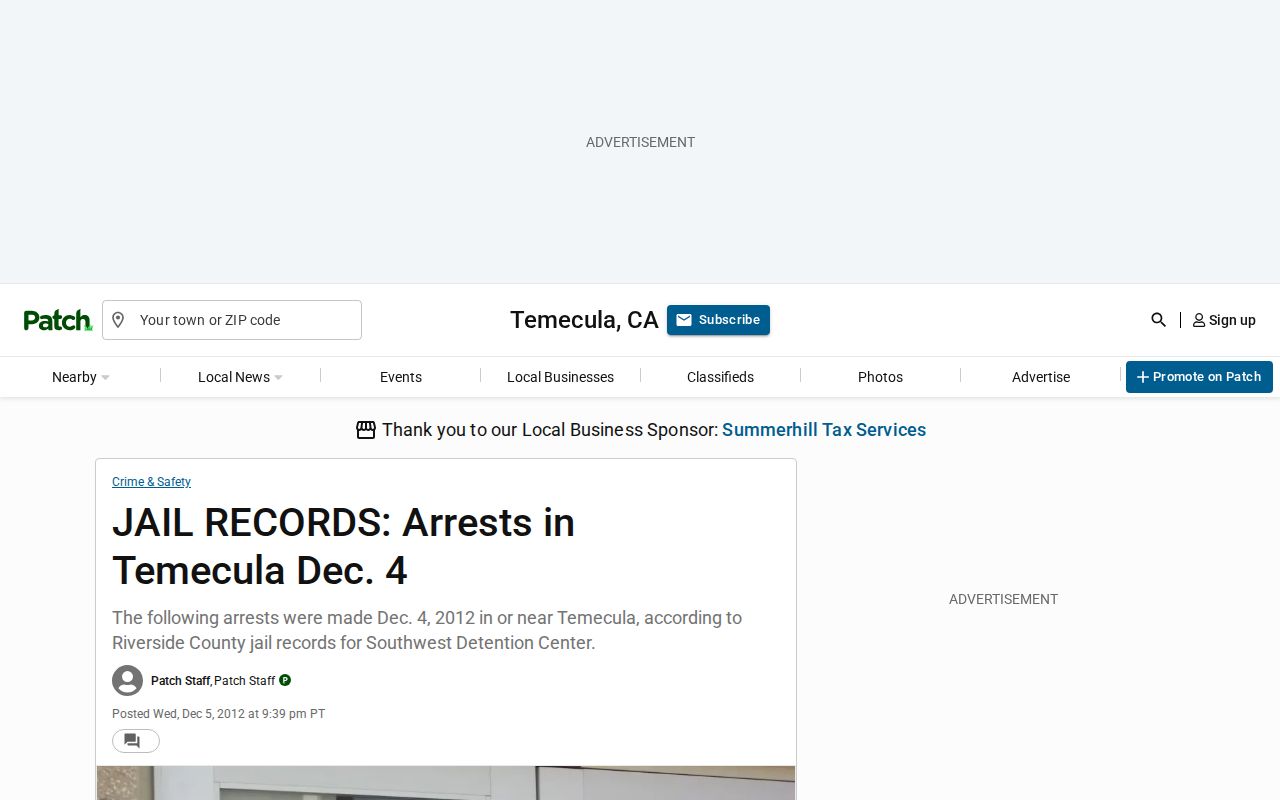
This is old news. It is not a live Sheriff custody list. Nor is it an official archive. Riverside County booking rosters sit elsewhere.
Riverside Arrest News Patterns
Local newsrooms cover Riverside arrests selectively. The Patch Lake Elsinore-Wildomar police and fire archive posts chosen crime and arrest stories. The Press-Enterprise crime section covers the wider region. CBS Los Angeles sometimes picks up major Riverside County events. Editorial judgment drives every pick. Geography and news value shape what runs. None of these outlets serves as a complete county booking publication.
Read with care. Check each report for its date, named agency, and source attribution. Then move to JIMS for county custody. Use Riverside Superior Court for the case path. Timing varies. A story can run before JIMS shows the arrest, after release, or after charges change. A publisher's photo is never proof that a public JIMS mugshot exists.
Two aggregators maintain identifiable Riverside County pages: RecentlyBooked and Mugshots.com. Both are unofficial. Entries may sit stale or incomplete. RecentlyBooked says it draws from public sheriff or jail information. Mugshots.com mixes historical aggregated entries with records that lack an image. Neither can replace JIMS, the Records unit, or the court. Busted Newspaper, Arrests.org, and Mugshots.zone offer no confirmed Riverside County pages. Treat them as unreliable local resources.
These unofficial pages have quirks. One may keep an entry after the county display changes. Another may omit a booking that JIMS lists. Neither condition proves current custody. Do not copy a publisher's names or images. Never add them to a personal list. Use a secondary page only to spot a possible date or agency. Then verify the Riverside County booking number and court case through official records.
Note: Event-driven reporting can explain an arrest, but only the originating agency and court can confirm the official record and outcome.
Archives and Retention
JIMS makes no promise as a historical archive. Retention depends on record type and the county schedule, according to the Sheriff FAQ. Government Code section 26202 generally keeps county records for at least two years. The Sheriff's own schedule is DRRS-SHF-2019-Rev04. Ask which series applies, since booking files and booking photos do not share one lifespan.
Has a range rolled out of public view? Send a focused CPRA request to the Sheriff. Say plainly what you want: an arrest log, a booking record, or a booking photograph. Add the date range, facility, booking number if known, and arresting agency. The Sheriff FAQ notes one catch. An arrest-log request can require a purpose declaration under Government Code section 7923.620. Protected address or personal information may be redacted.
Reports from before 2000 route to the Information Services Bureau. Anything from 2000 forward normally goes to the responsible station. A released person can drop from current custody while the booking record remains. Some material is simply not public. Sealed, juvenile, protected, exempt, transferred, or lawfully destroyed records may stay closed. The court runs its own retention schedule. A jail record and a court file can live very different online lives.
Precision pays off. Ask the records custodian about the series. Ask whether it still exists, was transferred, was destroyed under schedule, or is restricted. Name a photograph separately if you want one. An electronic identification image and a paper booking file may follow different rules. No official source fixes a public photo-retention period.
Note: A public portal entry rolling off does not prove the underlying booking record or court file was destroyed.
The National Archives at Riverside holds federal records. It is not the routine home of county booking files. Riverside arrest history stays with county custodians. Federal research is a different lane.
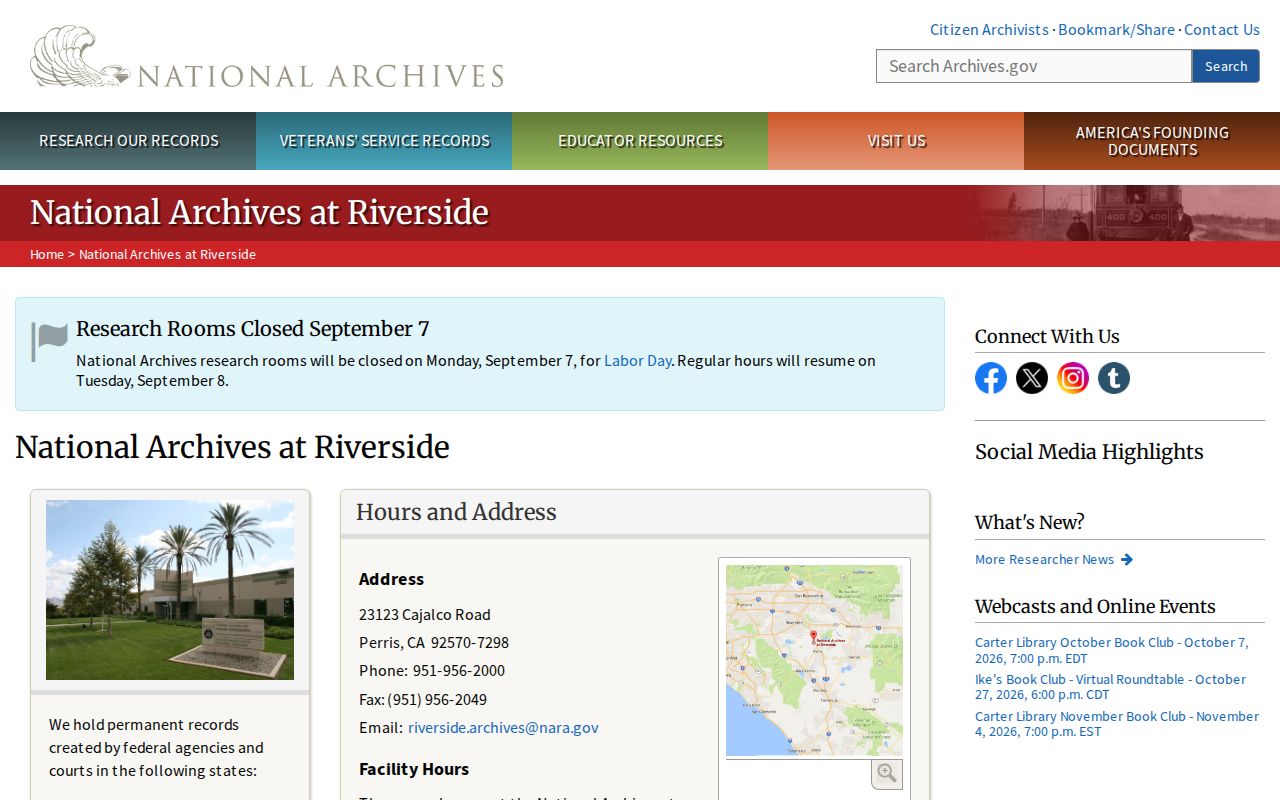
Start with ISB. Or contact the station that handled the arrest. Riverside County keeps older booking records local. The federal research facility is not the right first stop.